
Most people quit coding before they even really start. Not because it is too hard – but because no one explained it the right way.
Here is the real problem. You open a tutorial, see lines of strange symbols, and your brain immediately says “This is not for me.” That one moment stops thousands of people every single day.
But here is what they never tell you, that confusion you feel? Every developer felt it. Every single one.
Coding is not about being smart. It is about knowing where to start. And that is exactly what this guide gives you. A clear, honest, no-fluff answer to whether coding is hard to learn, and a simple path to actually get started today.
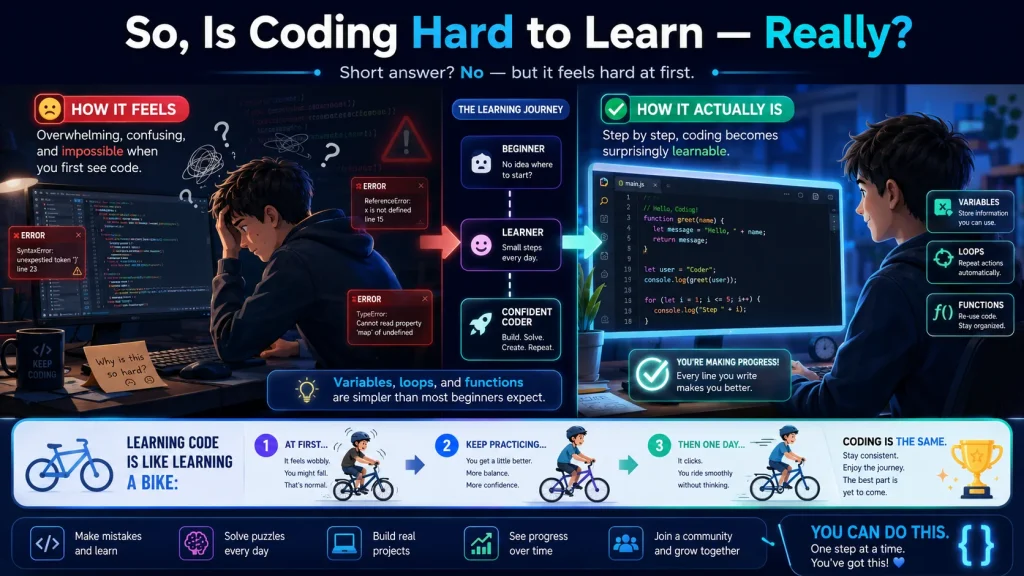
So, Is Coding Hard to Learn — Really?
Short answer? No — but it does feel hard at first. And there is a big difference between something feeling hard and actually being hard. Most beginners quit before they even give coding a real chance — not because it is impossible, but because that first look at code is genuinely confusing.
How it feels
How it actually is
Think of it this way
Remember the first time you tried to ride a bike? It felt impossible. You fell a few times, got frustrated, and almost gave up. But once it clicked — you never forgot. Coding works the same way. The early stage is wobbly. Then one day, it just clicks.So is coding difficult? Only at the very start — and only because it is new, not because it is truly hard. With a little patience and daily practice, coding gets easier faster than most people think.
Beginner Insight
Why Coding Feels Difficult for Beginners
Coding is not impossible — it just comes with a learning curve. If you are still wondering what coding actually is, start there first. Here is exactly what makes it feel tough at the start.
Coding Is a Gradual Learning Process
Coding is not learned overnight. It builds slowly — one concept at a time. Rushing it makes everything feel harder than it actually is.
01There’s So Much to Learn
Variables, loops, functions, syntax — the list feels endless at first. But you only ever need the basics to get started and make progress.
02Coding Can Feel Confusing at First
That first error message feels like a dead end. In reality, errors are just clues — they tell you exactly what needs to be fixed.
03Programming Languages Constantly Evolve
Languages update all the time. Beginners feel they can never keep up — but the good news is the core basics never really change.
04Competition in Tech Can Feel Intimidating
Seeing experienced developers online is overwhelming. But remember — every expert you admire started exactly where you are right now.
05Some Concepts Require Logical Thinking
Coding asks you to think step by step. This kind of logical thinking is a skill — and like any skill, it gets stronger with daily practice.
06Common Challenges Beginners Face
Missing a bracket, wrong spelling, skipping practice — small mistakes slow progress. Knowing these pitfalls ahead of time helps a lot.
07How Long Does It Take to Learn Coding?
There is no single answer — it depends on what you want to build and how much time you put in each day. Here is an honest breakdown.
It Depends on Your Goal
Web Developer
App Developer
Data Scientist
Realistic Timeline for Beginners
Month 1 – 3
Learn the Basics
Variables, loops, functions — the foundation every coder needs. 30 minutes a day is enough to get here.
Month 3 – 6
Build Small Projects
A simple website, a calculator, a basic app — real projects teach you more than any tutorial ever will.
Month 6 – 12
Job Ready
With consistent practice and a solid portfolio, many beginners land their first coding job within a year.
Coding Roadmap for Beginners
How to Start Coding Today — Step by Step
You do not need to figure it all out at once. Just follow these five simple steps and you will be writing real code sooner than you think.
Pick One Language Only
Do not jump between languages. Start with Python — it reads like plain English and is perfect for beginners.
Use One Free Resource Only
Pick one — freeCodeCamp, Codecademy, or YouTube. Switching resources every week slows you down.
Code for 30 Minutes Every Day
Consistency beats long sessions. 30 minutes daily for 3 months beats 5-hour weekends every single time.
Build Something Small
A calculator, a to-do list, a quiz game — building real things teaches you more than watching tutorials.
Ask for Help When Stuck
Google, Stack Overflow, Reddit — every developer gets stuck. Asking for help is not weakness, it is how you grow.
Start today. The best time to begin coding was yesterday. The second best time is right now — one step at a time.
The Best Ways to Learn Coding
There is no single right path. The best way to learn coding is the one you actually stick with. Here are five options that work for real beginners.
Take a Coding Class
A structured class gives you a clear path. You get feedback, deadlines, and support — great if self-discipline is tough for you.
Use Online Learning Platforms
Codecademy, Coursera, and Khan Academy make learning coding easy and self-paced. Perfect for busy beginners starting from zero.
Teach Yourself with Free Resources
YouTube, freeCodeCamp, and MDN Docs are completely free. Millions of developers learned this way — and so can you.
Join Coding Communities
Reddit, Discord, and Stack Overflow connect you with real developers. Asking questions and sharing progress speeds up learning fast.
Learn Through Hands-On Practice
This is the most powerful method. Build real things — a small project teaches you more than ten hours of watching tutorials. Start small, stay consistent, and your skills will grow faster than you expect.
Coding Practice Tips
Simple Tips to Make Learning Coding Easier
Learning to code does not have to feel painful. These four habits make the whole process faster, clearer, and a lot more fun.
Code Daily — Even 20 Minutes Counts
Short daily sessions beat long weekend marathons. 20 minutes every day builds real coding habits that stick for life.
Build Projects from Day One
Do not wait until you feel “ready.” Start a tiny project now. Building something real is how coding truly clicks.
Read Other People’s Code
GitHub is full of beginner-friendly projects. Reading real code teaches you tricks no tutorial ever shows you.
Celebrate Small Wins
Fixed a bug? Finished a function? That is worth celebrating. Small wins build confidence and keep you going.
Remember: Every expert coder started exactly where you are. The only difference is they kept going — one small habit at a time.
Which Programming Language Should a Beginner Start With?
With so many options out there, picking the first language feels overwhelming. Here are the three easiest starting points — and exactly why each one works for beginners.
Python — Best for Absolute Beginners
Why it works: Python reads almost like plain English. No confusing symbols. No complicated setup. Once you pick it up, concepts like functions in programming start making a lot more sense too.
JavaScript — Best for Web
Why it works: Write code and see results instantly in your browser. No extra tools needed — just open a webpage and start building real things.
HTML & CSS — Best First Step Ever
Why it works: Not programming — but the perfect starting point. You build real webpages from day one and see every change happen live.
Simple advice: Start with Python if you want to learn logic. Start with HTML + CSS if you want to build websites. Either way — just pick one and begin today.
Is Coding a Good Career Choice in 2026?
Short answer — yes, absolutely. Coding is one of the most in-demand skills on the planet right now. Here is what the numbers actually say.
25%
Job growth expected by 2030
$80K
Average entry-level coding salary in USA
Remote
Work from anywhere in the world
Job Demand Is Growing Fast
Every industry — healthcare, finance, education, retail — needs developers. Coding jobs are not going away anytime soon. Demand keeps climbing every year.
High Paying Coding Jobs Available Worldwide
From software engineers to data scientists, coding careers pay well. Even entry-level positions offer salaries most other fields cannot match at the start.
Do You Need a Degree to Get a Coding Job?
No — and this surprises most people. A strong portfolio beats a degree at many companies. What you can build matters far more than where you studied.
Verdict: Coding is one of the best career choices you can make in 2026 — whether you want a full-time job, freelance work, or just a skill that pays well on the side.
Your Coding Questions – Answered Honestly
These are the three questions almost every beginner asks before starting to code. Here are the real, no-fluff answers.
Question 01
Do coders get paid well?
Question 02
How long does it normally take to learn coding?
Question 03
Does coding require a high IQ?
Still unsure? The only way to find out if coding is right for you is to try it. Start with 20 minutes today — you might surprise yourself.